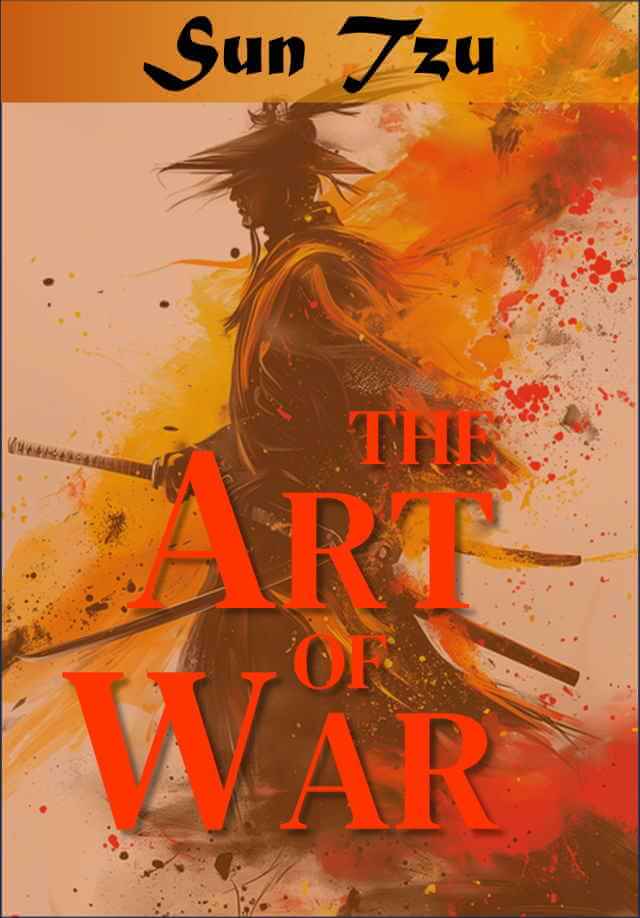
Book Covers
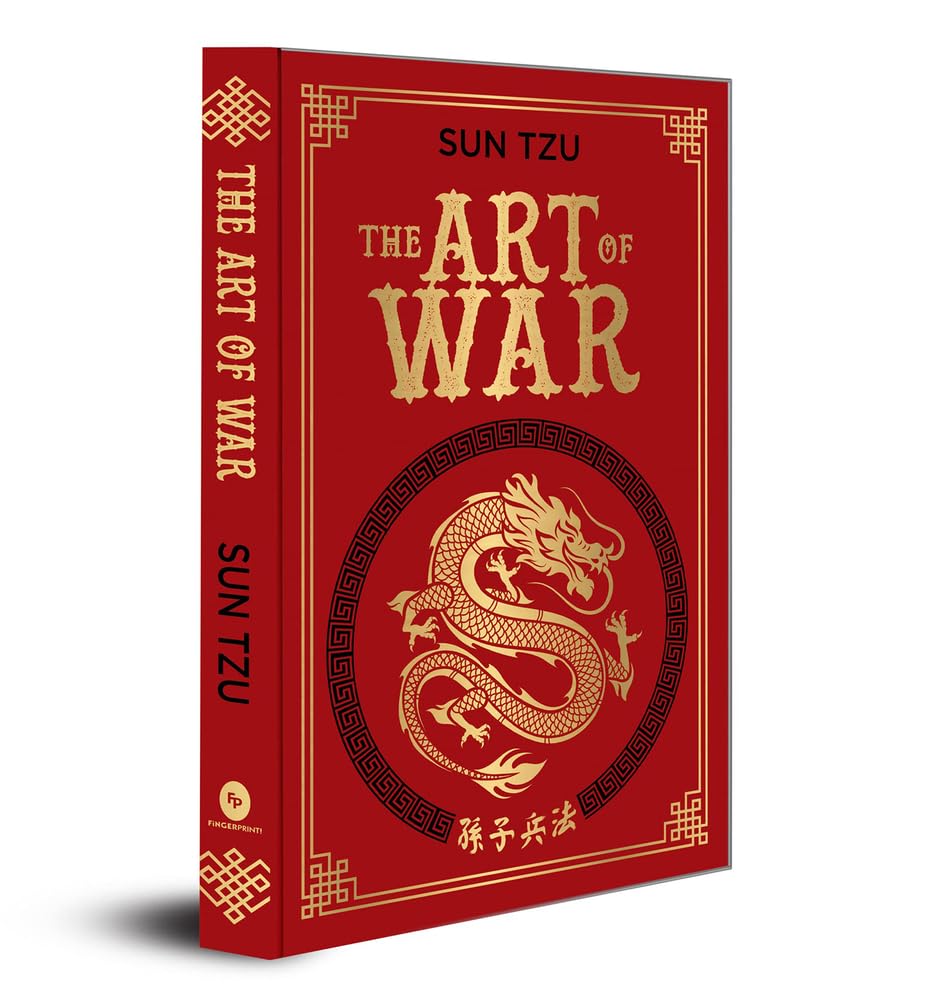
Book Meta
- Title: The Art of War
- Simply Referenced As: AoW
- Author(s): Sun Tzu
- Length: 232 pages
- ISBN-13: 978-9388369695
- Publisher: Fingerprint! Publishing
- Publication Year: 2018
Summary of Book Blurb
Written more than two millennia ago, The Art of War distills strategic thinking into a compact set of observations about conflict, preparation, and human behavior. Rather than offering battlefield tactics alone, AoW examines how advantage is created before confrontation begins—through knowledge, timing, adaptability, and restraint. The book treats conflict as a dynamic system shaped as much by perception and morale as by force, arguing that the highest form of success lies in shaping outcomes without prolonged struggle. Across its short chapters, AoW presents strategy not as aggression, but as disciplined foresight applied to uncertain conditions.
Core Insight
AoW advances the enduring idea that outcomes are shaped long before action begins, through perception, positioning, and understanding the terrain — human as much as physical. It treats conflict as a fluid system where rigidity is costly and responsiveness is decisive. The book’s lasting insight is that power is most effective when it is indirect, proportional, and grounded in accurate self-knowledge as well as knowledge of others. Strategy, in this view, is less about domination than about aligning circumstances so that resistance weakens on its own.
Intellectual Impact
What this book quietly does to your thinking and how you see the world.
- Conflict is rarely decided at the moment it becomes visible.
- Power operates through alignment of conditions, not constant exertion.
- Awareness—of self, others, and environment—is a strategic resource.
- Rigidity creates predictability; adaptability creates advantage.
- The most durable victories minimize resistance rather than overpower it.
AoW trains the reader to think in gradients instead of binaries: pressure instead of force, influence instead of control, timing instead of speed. It replaces heroic images of struggle with a quieter, systemic view of how outcomes actually form.
Legacy & Reach
Few works have traveled as far across time and disciplines as AoW. Originating in ancient China’s Warring States period†, the book emerged from an environment where survival depended on strategic clarity rather than brute strength. Its concise observations proved adaptable, allowing successive generations to reinterpret them for radically different contexts without exhausting their meaning.
Beyond military history, AoW quietly reshaped how societies think about competition, leadership, and power. Its influence is visible in political strategy, corporate decision-making, negotiation theory, and even personal development literature‡. The book’s appeal lies in its abstraction: it rarely prescribes fixed actions, instead offering principles that invite interpretation. This openness allowed AoW to remain relevant as warfare evolved from chariots to cyber operations, and as conflict expanded into economic and informational domains§.
Culturally, AoW helped normalize the idea that restraint can be a form of strength, and that foresight often outweighs courage. It shifted the moral imagination of conflict away from heroic confrontation toward systemic thinking—where intelligence, timing, and perception quietly determine outcomes. That reframing continues to influence how modern societies discuss leadership and strategic success, long after the book’s original battlefield context has faded.
Comparative Anchor
AoW anticipates later strategic and philosophical thinkers without sharing their vocabulary. Its systemic view of conflict resonates with Clausewitz’s emphasis on uncertainty and friction, though AoW places greater weight on avoidance and foresight. In management theory, its ideas echo in Peter Drucker’s focus on effectiveness over effort. Modern strategists like Nassim Nicholas Taleb extend AoW’s suspicion of rigid plans into discussions of fragility and adaptability, while Michel Foucault’s analyses of power mirror AoW’s insight that influence often operates indirectly. Across these dialogues, AoW remains foundational rather than derivative.
Cognitive Impact Map
How This Book Affects Your Thinking
Challenges
- AoW challenges the assumption that strength is primarily expressed through direct confrontation.
- AoW unsettles the belief that victory depends on superior force rather than superior understanding.
- AoW questions the idea that conflict begins at the moment of engagement rather than in preparation.
- AoW complicates the notion that moral clarity and strategic effectiveness always align.
Reframes
- AoW reframes conflict as a system of variables — terrain, morale, timing — rather than isolated actions.
- AoW recasts leadership as the management of conditions rather than the issuing of commands.
- AoW reinterprets deception not as dishonor, but as an inherent feature of competitive environments.
- AoW shifts the focus from winning battles to shaping outcomes that make battles unnecessary.
Strengthens
- AoW reinforces the intuition that awareness of limitations is a strategic advantage.
- AoW sharpens the sense that flexibility outperforms rigid planning under uncertainty.
- AoW clarifies the role of perception in shaping behavior, both one’s own and others’.
- AoW deepens the suspicion that visible power often masks underlying vulnerability.
Book Link
Full Disclosure: If you click the link below and purchase this book on Amazon, we may earn a small commission at no additional cost to you. These commissions help support Unsans and keep it running. Thank you for your support; we genuinely appreciate it.
Link: https://amzn.to/4kkiFV7
Thank you!
What You Learn From This Book
Key Takeaways
AoW leaves the reader with a sharpened sensitivity to how outcomes emerge from preparation, perception, and restraint rather than dramatic action. It encourages thinking in terms of systems and conditions, where subtle shifts can dissolve opposition without escalation, and where timing and self-awareness quietly determine success more often than force.
In essence: Strength applied too visibly is often weaker than strength applied with foresight.
Canonicity & Authority
Canonical
Grade: High
- AoW is continuously cited across military, political, and business literature.
- Its aphoristic structure allows repeated reinterpretation without exhaustion.
- The book occupies a stable position in global strategic canons.
Influence
Grade: High
- AoW informs disciplines far beyond warfare, including management and negotiation.
- Its principles are embedded in institutional and strategic language worldwide.
- The book’s influence persists without reliance on historical context.
Relevance
Grade: High
- AoW addresses recurring patterns of competition rather than transient conditions.
- Its insights scale across eras, technologies, and social systems.
- The book continues to shape strategic thinking decades and centuries later.
Author Authority
Grade: Average
- Sun Tzu’s authority rests primarily on this single attributed work.
- The historical details of authorship remain partially uncertain.
- Despite this, the ideas transcend biographical limitations.
Overall Pattern
Overall Grade: High
AoW exhibits enduring authority through conceptual adaptability rather than authorial presence.
Gist of Readers’ Reviews on Amazon
What readers liked most:
- Readers appreciate the book’s brevity paired with depth, often revisiting it repeatedly.
- Many value its applicability beyond warfare, especially in business and leadership.
- Readers describe moments of conceptual clarity rather than linear learning.
What readers liked least:
- Some readers find the aphoristic style too abstract without commentary.
- A few struggle with translations that feel archaic or uneven.
- Others expect tactical detail and are surprised by the book’s philosophical tone
Page Sponsor’s Message (Why?)
SealedWeb is a zero-trust security platform that lets you share files securely while retaining full control of your information. Learn more: https://www.sealedweb.com/landing-offer?utm_source=unsans.com.
Essays, Reflections, Cultural Readings
Articles
“The Art of War” — Wikipedia
A comprehensive overview of the book’s historical context, themes, and influence.
Why it matters:
- Grounds AoW in its original political environment
- Clarifies interpretive debates around translation
- Provides historical continuity
Read it at this link: https://en.wikipedia.org/wiki/The_Art_of_War
How to Read Sun Tzu’s “Art of War” the Way Its Author Intended It to Be Read
A thoughtful discussion on the philosophical roots of AoW, illustrating how Daoist concepts like situational potential underlie Sun Tzu’s strategic logic, helping modern readers grasp the subtlety behind seemingly simple maxims.††
Why it matters:
- Connects AoW to its broader intellectual context.
- Helps the reader see why the book’s principles endure beyond specific historical battles.
- Offers insight into how classical Chinese philosophy can inform leadership today.
Read it at this link: https://now.tufts.edu/2023/06/15/how-read-sun-tzus-art-war-way-its-author-intended-it-be-read ††
Lessons on Leadership from The Art of War by Sun Tzu
A leadership-focused exploration of how Sun Tzu’s principles apply to managing teams and complex projects today, with examples from modern organizational practice.†§
Why it matters:
- Shows how strategic patience and timing matter in leading people.
- Demonstrates the continuing relevance of coherent leadership values.
- Connects ancient lessons to psychological safety and team performance.
Read it at this link: https://www.linkedin.com/pulse/lessons-leadership-from-art-war-sun-tzu-elham-sarikhani-pvdbe †§
Sun Tzu and the Art of War: Timeless Strategies for Modern Success
A concise Modern Medium piece that explores core lessons of AoW and their application to business strategy, competition, adaptability, and leadership in the contemporary corporate world.†‡
Why it matters:
- Bridges ancient strategy with everyday decision-making.
- Highlights adaptability and market awareness as extensions of strategic thinking.
- Reinforces how classic military insight still resonates in organizational life.
Read it at this link: https://medium.com/@TL.Ang/sun-tzu-and-the-art-of-war-timeless-strategies-for-modern-success-05c4750d2bdc †‡
“Strategy as Indirect Action” — Stanford Encyclopedia of Philosophy
Discusses indirectness as a strategic principle across traditions.
Why it matters:
- Places AoW within broader strategic philosophy
- Clarifies conceptual parallels
- Deepens theoretical understanding
Read it at this link: https://plato.stanford.edu
Videos
The following videos are among the most authoritative and insightful available on Sun Tzu’s classic, The Art of War. They have been selected based on several criteria:
- They explain the principles in context, rather than simply reading the text.
- They connect ancient strategic ideas to modern thinking and applications.
- Narration combined with visual or graphic support enhances understanding and retention.
- Longer, well-structured presentations provide more depth than short summaries or quote compilations
The Art of War Documentary – Narrated by Donald Sutherland
Why this matters:
A comprehensive explanation of AoW with structured insights, suitable for both first‑time learners and people revisiting the book’s principles. Typically, videos with balanced overviews and interpretation (rather than just quotes) give the best conceptual grounding.
Sun Tzu – The Art of War Documentary
Why this matters:
Often, this type of video combines philosophical depth with practical application, framing AoW’s ideas within modern strategic contexts. The authority here comes from thoughtful pacing and emphasis on principles rather than sensational summaries.
The Art of War by Sun Tzu: Entire Unabridged Audiobook
Why this matters:
Includes unabridged audiobook or narrated text components, which can be valuable for people who want a fuller encounter with the material as text rather than just commentary. This gives direct exposure to the work’s language.
The Art of War by Sun Tzu with Historical Examples
Why this matters:
A well‑produced educational video that often breaks down key themes such as “winning without fighting” and how Sun Tzu’s model operates as both philosophy and practice. Videos like this tend to be good for a solid middle ground between summary and interpretation.
The Art Of War by Sun Tzu
Why this matters:
This video tends to be more visually engaging and narrative‑driven, which helps with retention. While not always the deepest analytically, it’s strong for newcomers who want the strategic essence in a clear, memorable format.
Footnotes & Further Reading
† https://en.wikipedia.org/wiki/Warring_States_period
‡ https://en.wikipedia.org/wiki/Strategy
§ https://en.wikipedia.org/wiki/Strategic_management†† “How to Read Sun Tzu’s Art of War the Way Its Author Intended It to Be Read,” Tufts Now — a scholarly exploration of the book’s philosophical underpinnings and how its worldview shapes strategic thinking.
†‡ “Sun Tzu and the Art of War: Timeless Strategies for Modern Success,” Medium — connects classic strategy to corporate and personal success principles.
†§ “Lessons on Leadership from The Art of War by Sun Tzu,” LinkedIn — a leadership perspective grounded in Sun Tzu’s principles.