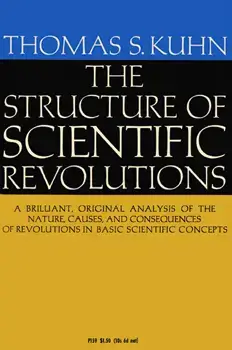
Book Covers
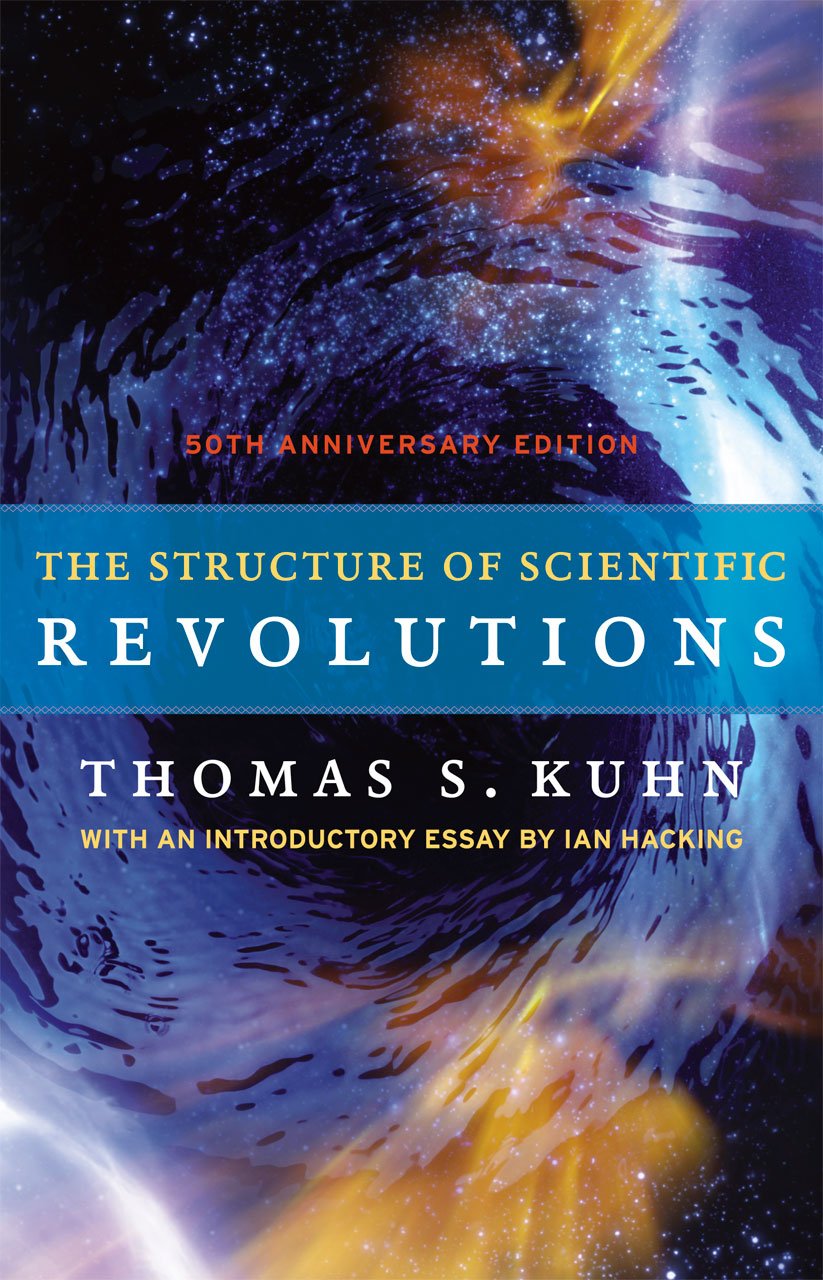
Book Meta
- Title: The Structure of Scientific Revolutions: 50th Anniversary Edition
- Simply Referenced As: SSR
- Author(s): Thomas S. Kuhn
- Length: 264 pages
- ISBN-13: 978-0226458113
- Publisher: University of Chicago Press
- Publication Year: 2012
Core Insight
SSR asserts that knowledge advances not by simple accumulation, but through episodic transformations in how reality itself is interpreted. What scientists take to be facts, problems, and solutions depends on shared frameworks that feel stable until they quietly stop working. When these frameworks fracture, change is not merely additive — it alters the very standards by which understanding is judged. The book leaves readers with a durable insight: progress often requires letting go of once-successful ways of seeing.
Intellectual Impact
What this book quietly does to your thinking.
- Knowledge advances within shared frameworks that define relevance and meaning.
- Evidence does not speak alone; it is interpreted through inherited standards.
- Disruption is not an anomaly of progress but a structural feature of it.
- Intellectual conflict often reflects incompatible worldviews, not irrationality.
- Letting go of a framework can feel like loss even when it enables discovery.
Net effect: A more historically grounded, psychologically realistic view of how understanding evolves.
Legacy & Reach
Few books have altered how modern societies understand knowledge as profoundly as SSR. Before Kuhn, scientific progress was commonly imagined as linear and objective, driven primarily by better data and sharper reasoning. Kuhn did not deny rigor or evidence, but he introduced a more textured picture: science as a communal activity governed by norms, exemplars, and shared expectations. This reframing quietly reshaped how historians, sociologists, philosophers, and even working scientists talked about discovery and disagreement.
The book’s most influential contribution—its account of paradigm change—escaped the boundaries of philosophy of science and entered everyday language. Today, “paradigm shift” is used to describe transformations in technology, business, politics, and culture, often without awareness of its precise origins. That diffusion itself is evidence of the book’s reach: SSR provided a vocabulary for understanding why intelligent communities can talk past one another while operating in good faith†.
In universities, SSR helped legitimize the study of science as a historical and sociological phenomenon, not merely a logical one. It influenced emerging fields such as science and technology studies (STS)‡ and altered how textbooks, curricula, and scientific biographies were written. Even critics who rejected Kuhn’s conclusions found themselves forced to engage his framework, an indication of its gravitational pull.
Half a century on, SSR continues to resonate because it addresses a perennial tension: the desire to believe that knowledge is purely objective, and the growing awareness that human practices, incentives, and traditions shape what we come to accept as true. Its endurance lies less in any single argument than in the durable lens it offers for interpreting intellectual change itself.
Comparative Anchor
Kuhn’s SSR stands in quiet dialogue with later thinkers who examined knowledge as a situated practice. Where Karl Popper emphasized falsification and critical testing, Kuhn emphasized consensus and continuity§. Later figures such as Michel Foucault extended similar questions into discourse and power, while Imre Lakatos sought a middle path between rigid rationalism and historical relativism. Together, these conversations position SSR as a foundational reference point: not the final word on knowledge change, but the one that made such conversations unavoidable
Summary of Book Blurb
First published in the early 1960s and refined across decades, SSR challenges the comforting picture of science as a steady, cumulative march toward truth. Instead, the book proposes that scientific progress unfolds through long periods of consensus punctuated by disruptive breaks—moments when established frameworks fail and new ways of seeing take their place. Drawing on historical case studies across the sciences, Thomas S. Kuhn reveals how scientific communities organize knowledge, resist change, and eventually undergo transformative shifts that redefine what counts as a legitimate question, method, or explanation. The result is a reframing of science not merely as a logical enterprise, but as a deeply human one, shaped by tradition, training, and collective judgment.
Cognitive Impact Map
How This Book Affects Your Thinking
Challenges
- Scientific progress is commonly assumed to be a smooth accumulation of verified facts.
- Disagreement among experts is often taken as a sign of poor reasoning or insufficient data.
- Methodological rules are frequently treated as timeless rather than historically situated.
- Conceptual frameworks are assumed to reflect reality directly, rather than mediate access to it.
Reframes
- Scientific disagreement is reinterpreted as a clash of frameworks rather than isolated errors.
- Failure in research is reframed as a signal of deeper structural tension, not merely bad execution.
- Evidence is seen as meaningful only within shared interpretive contexts.
- Change in knowledge is reframed as episodic and reorganizational, not merely corrective.
Strengthens
- The intuition that expertise involves tacit knowledge beyond explicit rules is clarified.
- The sense that institutional training shapes perception is given a coherent structure.
- The suspicion that progress can involve loss as well as gain is made intellectually respectable.
- The idea that understanding depends on shared exemplars is rendered more precise.
Book Link
Full Disclosure: If you click the link below and purchase this book on Amazon, we may earn a small commission at no additional cost to you. These commissions help support Unsans and keep it running. Thank you for your support; we genuinely appreciate it.
Link: https://amzn.to/4qny4W2
Thank you!
What You Learn From This Book
Key Takeaways
SSR leaves readers with a sharpened awareness that how we frame questions quietly governs what answers we are capable of seeing, and that deeply successful systems of thought can become obstacles precisely because of their success. Intellectual change, the book suggests, is less about correcting mistakes and more about learning to see differently.
In sum: Progress often begins where certainty quietly breaks down.
Intellectual Impact Card
How This Book Changes How You See the World
The Muqaddimah alters perception quietly rather than forcefully. After reading it, social life no longer appears as a sequence of intentions, decisions, or moral failures. It begins to look like a layered system shaped by constraints that persist across generations.
Power ceases to feel personal. It appears as a function of cohesion, necessity, and scale. Prosperity no longer seems purely beneficial; it reveals itself as a condition that gradually alters discipline, incentives, and institutional resilience. Decline, in turn, stops looking sudden. It appears slow, cumulative, and often inseparable from earlier success.
The book trains the reader to distrust surface explanations—especially narratives that attribute historical outcomes to virtue, corruption, brilliance, or betrayal alone. It sharpens sensitivity to time: how advantages compound, how habits harden, and how structures outlive the intentions that created them.
What remains after the arguments fade is a durable shift in orientation. One begins to look past events toward the conditions that make them repeatable. History becomes less dramatic, but more intelligible.
Compressed takeaway: Societies change not because they forget lessons, but because the conditions that once sustained them no longer exist.
Canonicity & Authority
Canonical
Grade: High
- The book is among the most cited works in philosophy of science.
- Its terminology has entered standard academic and popular vocabularies.
- It is routinely taught across disciplines, not only in philosophy.
Influence
Grade: High
- Its ideas shaped sociology, history, and science studies.
- It influenced debates in economics, political theory, and organizational studies.
- Its conceptual framework is adapted far beyond its original domain.
Relevance
Grade: High
- Its influence spans decades rather than intellectual cycles.
- Its core ideas continue to frame contemporary debates about expertise.
- It remains relevant amid ongoing scientific and technological change.
Author Authority
Grade: High
- Kuhn is cited well beyond philosophy of science.
- His work is referenced in cultural and institutional analysis.
- His ideas inform both scholarly and applied discussions.
Overall Pattern
Overall Grade: High
The Structure of Scientific Revolutions exhibits a rare combination of disciplinary depth and cultural diffusion.
Gist of Readers’ Reviews on Amazon
What readers liked most:
- Readers valued the book’s ability to explain scientific disagreement without caricature.
- Many found the historical examples illuminating rather than decorative.
- Readers often described a lasting shift in how they interpret intellectual change.
What readers liked least:
- Some readers found the prose demanding and slow-building.
- Others struggled with the abstraction of “paradigms” without concrete modern examples.
- A few felt the arguments raised questions without fully resolving them.
Page Sponsor’s Message (Why?)
SealedWeb is a zero-trust security platform that lets you share files securely while retaining full control of your information. Learn more: https://www.sealedweb.com/landing-offer?utm_source=unsans.com.
Essays, Reflections, Cultural Readings
Articles
“Thomas Kuhn” (Stanford Encyclopedia of Philosophy)
A canonical overview of Kuhn’s arguments and their philosophical implications.
Why it matters:
- Clarifies common misreadings of paradigm shifts
- Situates Kuhn within philosophy of science debates
- Explains critiques and defenses
Read it at this link: https://plato.stanford.edu/entries/thomas-kuhn/
“Paradigm Shift” (Wikipedia)
A concise account of how Kuhn’s concept entered broader culture.
Why it matters:
- Tracks conceptual diffusion beyond science
- Separates popular usage from original meaning
- Provides historical grounding
Read it at this link: https://en.wikipedia.org/wiki/Paradigm_shift
“Normal Science” (Wikipedia)
An accessible explanation of one of Kuhn’s most influential ideas.
Why it matters:
- Explains stability before disruption
- Illuminates scientific training and consensus
- Clarifies why anomalies are often ignored
Read it at this link: https://en.wikipedia.org/wiki/Normal_science
Videos
Why these three?
✔ Conceptual comprehensiveness: Together they cover both the structure and the philosophical punch of SSR (framework, crisis, shift).
✔ Accessibility: They bridge technical and intuitive explanations — useful for curious first-timers and deep thinkers alike.
✔ Relevance: All three clearly relate to Kuhn’s core contribution: that science doesn’t simply add facts but transforms the lens through which facts make sense. †
Thomas Kuhn: The Structure of Scientific Revolutions
A solid, general introduction that walks through Kuhn’s model of normal vs. extraordinary science, how anomalies accumulate, and how paradigms shift. It’s ideal for readers who want a clear conceptual overview of the book’s architecture and why paradigm change matters. †
Kuhn’s paradigm shift
A direct visual explanation of the paradigm shift — arguably the single most influential concept in SSR. This video lays out the core idea without distracting side topics, making it ideal for readers who want an intuitive grasp of how scientific frameworks change over time.
Note: While the video is older and may feel stylistically dated, its visual explanation remains exceptionally clear and effective.
KUHN Easy
Why this matters:
- This video focuses directly on Kuhn’s central model of scientific change — the cycle of normal science, crisis, and paradigm shift — which is the core conceptual engine of SSR.
- It’s analytical without being overly academic, making it accessible to curious learners and readers exploring how SSR reshapes understanding of scientific progress.
- The presenter highlights nuances and criticisms that stimulate deeper engagement rather than simple recitation.
View this video here: https://www.youtube.com/watch?v=OjsREF275Pg (if needed, select the correct language audio track from the video’s settings before watching.)
Footnotes & Further Reading
† “Paradigm shift,” Wikipedia, https://en.wikipedia.org/wiki/Paradigm_shift
‡ “Science and technology studies,” Wikipedia, https://en.wikipedia.org/wiki/Science_and_technology_studies
§ Popper, Karl, The Logic of Scientific Discovery, op. cit.